The simple key to a child’s future: CLEAN WATER prevents stunting, improves health outcomes more than any other intervention
12/13/2025 / By Lance D Johnson
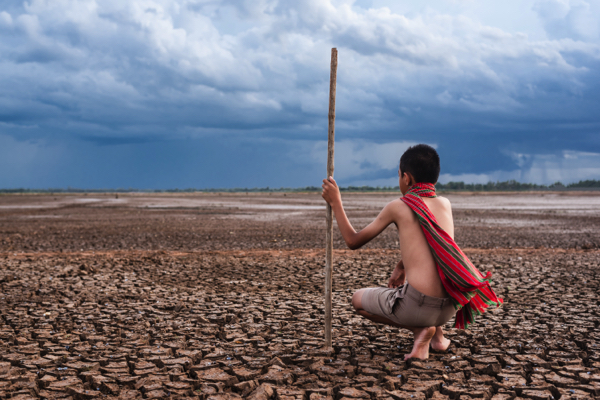
In the quiet, sun-baked villages of Mozambique, a child’s future is often measured in centimeters. The relentless struggle against chronic malnutrition, marked by stunted growth, writes a story of diminished potential before a life truly begins. While global health dialogues often spiral into complex debates about advanced medical interventions, a new study from the University of Notre Dame points to a foundational solution. The research reveals that improving access to safe drinking water can slash the odds of a child becoming stunted by a striking 20%, an effect more powerful than sanitation improvements alone. This finding cuts through the noise, suggesting that the first, most profound step in healing a generation and improving health outcomes in third world nations may not be found in a syringe or a pill, but in a clean, safe glass of water.
Key points:
- A new national study in Mozambique found that access to an improved water source reduces the odds of childhood stunting by approximately 20%.
- Improved sanitation did not show an independent effect on stunting, and neither water nor sanitation had a consistent link to acute malnutrition, known as wasting.
- The research provides a clear, evidence-based roadmap for policymakers, urging a prioritized investment in expanding and monitoring clean water access as a cornerstone of fighting chronic malnutrition.
- The findings highlight that the components of Water, Sanitation, and Hygiene (WASH) programs work through different pathways, meaning a one-size-fits-all approach is ineffective.
For the families living this reality, the data translates into a daily, visceral struggle. Stunting is not simply about being short; it is a physical manifestation of a body and brain deprived of the building blocks needed to thrive. It carries lifelong sentences: impaired cognitive development, reduced school performance, and lower economic productivity in adulthood. UNICEF estimates nearly 150 million children under five are stunted worldwide, with the heaviest burdens in regions like sub-Saharan Africa, where Mozambique sits. The Notre Dame study, published in the journal Children, analyzed health data from more than 3,500 Mozambican children. It sought to untangle a critical question: in a country where 37% of young children are stunted, does the safety of their water matter more than the safety of their sanitation?
“Access to clean and safe drinking water is critical for preventing chronic undernutrition in children,” said Santosh Kumar Gautam, an associate professor at Notre Dame and a study author. “In Mozambique, where millions lack safe water, focusing on water interventions can have the greatest impact on stunting.”
The mechanics are biological. Contaminated water is a direct conduit for diarrheal diseases and a condition called environmental enteric dysfunction, which inflames and damages the gut lining. A damaged gut cannot properly absorb nutrients, no matter how much food a child consumes. The calories pass through a body that remains starved at a cellular level, its growth perpetually on hold. This is why the study’s water finding resonates with such force; it addresses a primary point of breakdown in the nutritional chain.
International aid must emphasize clean water and nutrition, not biological experiments on undernourished children
The historical context of international aid and development is littered with well-intentioned but fragmented efforts. Nutritional programs, sanitation drives, and vaccination campaigns often operate in parallel, sometimes missing the synergistic connections between them. The Sphere Handbook, a cornerstone of humanitarian standards, outlines minimum standards for life-saving assistance, from water supplies and sanitation to food security and health services. It stresses that responses must be integrated, recognizing that a child’s health is affected by the water she drinks, the safety of her toilet, the quality of her food, and her access to clinical care. This new research injects precision into that integration, suggesting that within the WASH umbrella, water access may be the most potent lever for influencing long-term growth.
“For a parent or caregiver, this means something simple: The safety of the water a child drinks every day can shape that child’s development for years,” said William Pater, a biological sciences student and co-author of the study. This human element is everything. It moves the discussion from statistical odds to the daily ritual of a mother drawing water from a well, hoping it won’t sicken her children. It connects to the vulnerable groups—women and girls often tasked with water collection—who bear the physical burden of fetching water from distant, sometimes dangerous sources. Improving water access is not just a health intervention; it is an act of freeing time, reducing physical strain, and increasing community safety.
The policy implications are clear, yet they require a shift in focus. The researchers recommend that leaders prioritize expanding safely managed water supplies, strengthen water-quality monitoring in high-stunting regions, and continue sanitation improvements for broader public health and dignity benefits, even if the child growth gains are not immediate. They also stress the need to track progress with clear indicators. This is where the study serves as a crucial guide for aid distribution and government planning. In an environment of limited resources, knowing that a dollar invested in a clean water source may yield a greater return against stunting than a dollar invested in a latrine allows for smarter, more strategic targeting.
In the global fight against malnutrition, which seeks to protect human rights and ensure life with dignity, the journey of a thousand miles begins with a single, clean drop. For millions of children in Mozambique and beyond, that drop could be the difference between a life constrained and a life fully realized.
Sources include:
Submit a correction >>
Tagged Under:
AIDS crisis, child health, childhood development, clean water, community health, economic impact, foundations of health, global health, investment, malnutrition, Mozambique, nutrition, Policy, preventative care, Public Health, research, sanitation, stunting, UNICEF, water access
This article may contain statements that reflect the opinion of the author
RECENT NEWS & ARTICLES